Certainly, if you wish to evoke the universe of the Gnawa you have to enter many worlds ! That of music, obviously, but also that of history and its places of migration, that of spirituality, the sacred and even the invisible world !
These descendants of slaves from sub-Saharan countries (Guinea, Senegal, Sudan, Mali…), gradually arrived in Morocco between the 16th and 19th centuries. Over time it is a true brotherhood that integrates into the country, especially around Marrakech and Essaouira. Their rituals, spirituality and music could flourish there without too many obstacles.
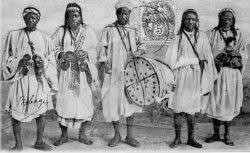
Today the most visible part of this culture is this music with frantic rhythms such as we can still hear it, every day, on the Jemaa el Fna square in Marrakech.
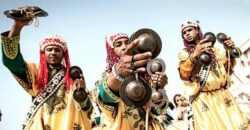
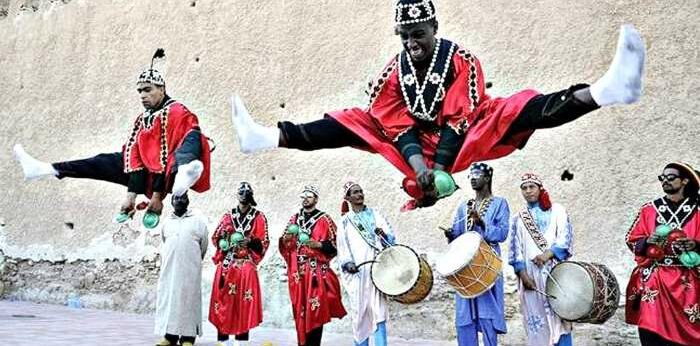
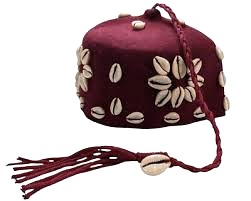
The musicians love to share their joy. The shimmering colors of their costumes also catch the eye of passersby. One of them swirls the pompom of his hat, chekiya or chechia, adorned with shells. He enjoys giving fun! The spectators take full eyes and ears!
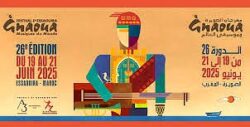
When the collaboration of Gnawa musicians with famous Western artists, such as Jimmy Page, Robert Plant (Led Zeppelin), Randy Weston… started, it gave their art a global resonance. The Gnawa and World Music Festival of Essaouira, contributed greatly to its development.
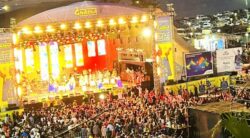
From the 90s, World Music or Fusion Music allowed this musical universe, which is so particular and recognizable among a thousand, to establish itself sustainably with success.
Gnawa culture has been inscribed on the Representative List of the Intangible Cultural Heritage of Humanity since 2019
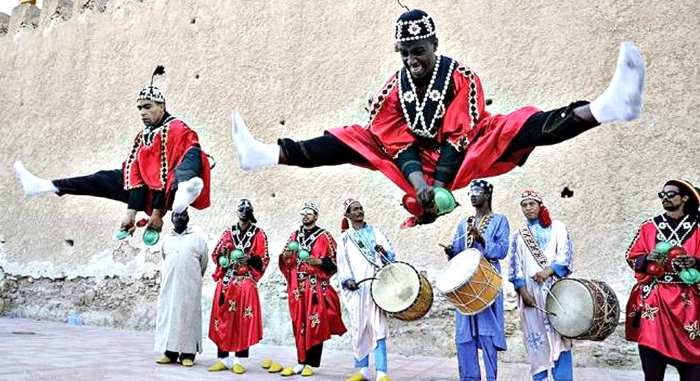
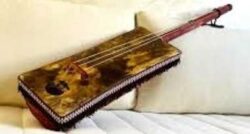
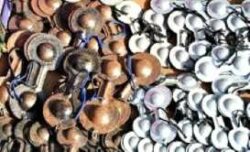
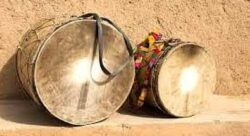
The frenzy of Gnawa music is articulated around three instruments: the guembri, a kind of lute-drum, the metal rattles also called qraqech, and the drums or tbel (also named ganga), struck with two sticks.
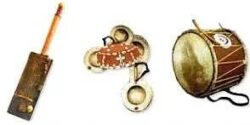
The guembri has only three strings (in goat intestines) and its resonance box covered with a dromedary skin, tanned and dried, gives it that percussive sound. It is played by the master-musician (maâlem) who is also the singer.
The qraqech are held by the dancers who can perform jumps and stunts. These metallic castanets, emblematic of Gnawa music, reinforce its stunning character.
The tbels, carried over the shoulder, resonate strongly and can introduce the sacred rite of possession.
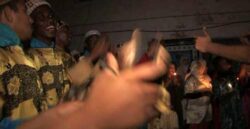
Certainly, the concerts or recordings of Gnawa music allow one to glimpse and even feel the whirlwind and dizziness generated by the repetitive, haunting and hypnotic form of its rhythms. However, only the trance ceremonies, called “lila” allow to apprehend the religious and spiritual dimension, the strength of the invocation of spirits and the therapeutic and psychic vocation of this sound universe. It is a true connection with the divine that wants to be established!
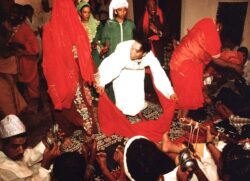
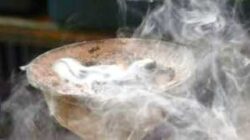
For having experienced it, these moments are quite unusual and memorable! Everything starts like a quiet evening with friends. We enjoy sweets, mint tea, slilou, and juices, exchanging joyfully… When the music starts, the tension rises very gradually. The percussions, tbel, awaken. The rhythms are now like calls for an invitation to possession by protective spirits. The smells of incense, of benzoin rise from the braziers. Stoles of all colors twirl. All senses are mobilized !
Between the twirling dances, the cries, the moans, the incantations, the heads that turn, the shaggy hair, the fainting, the trembles, the convulsions, the experience is impressive and unforgettable, believe me!