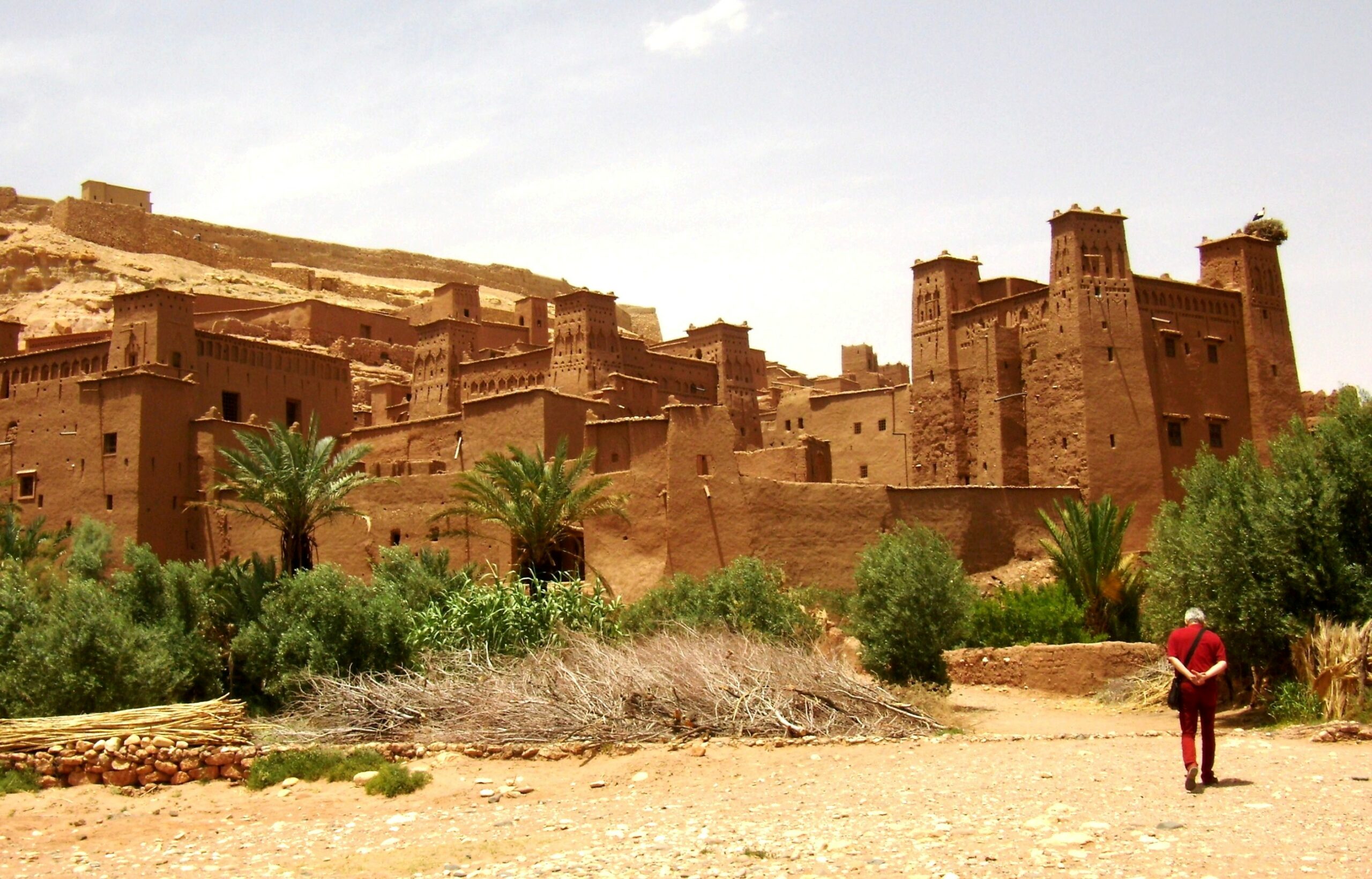
UNESCO World Heritage
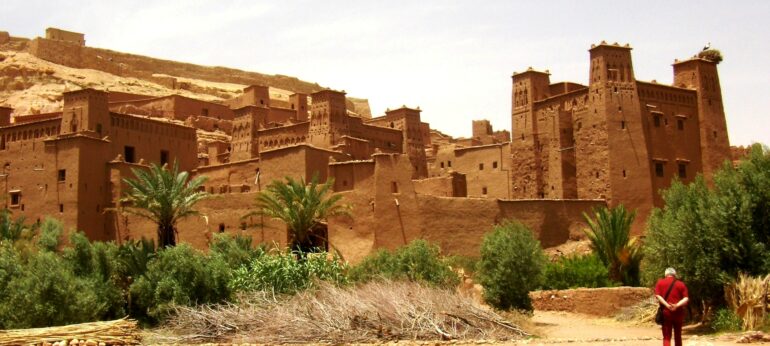
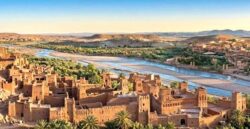
The village of Aït Benhaddou is an exceptional and unmissable site in southern Morocco. The ksar, a fortified city, which is on the UNESCO World Heritage List, is well worth visiting. Filmmakers from all over the world know about its beauty and the list of films shot in this area is impressive ! The French used to call it the “Mount Saint-Michel of the Chleuhs” (Berber people).
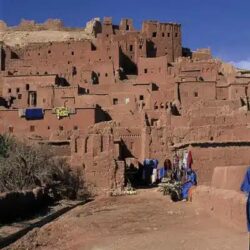
Fragility
Here, it is not granite that defies the vagaries of climate. Just “Pisé”, rammed earth, a material made of compacted raw earth, clay, sand, gravel, straw, wood… Its friend is the sun, its enemy is water and its infiltrations. This is a good thing, since the region experiences, on average, only one month of low rainfall per year.
This pre-Saharan architecture still requires permanent maintenance and regular reconstruction. This makes its dating very random.
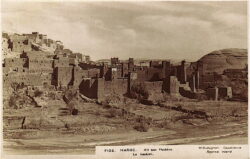
The origin dates back perhaps to the 8th century and some parts, still visible today, date from the 18th century. We are about 30 km from Ouarzazate. This area was on the way of the desert caravaneers on the commercial route to Marrakech. The village was one of the counters.
The clans
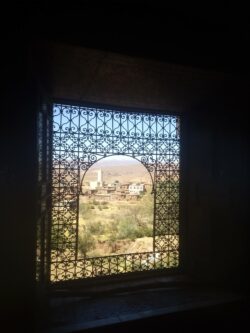 In ancient times, the tribe of the Aït Benhaddou controlled the region. Later, they joined, by marriage, the Glaoua clan. The village of Telouet is another fief of these Lords of the South.
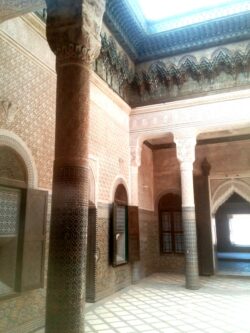
Located a few kilometers away, you can still see the ruins of the Palace of Thami El Glaoui, the Pasha of Marrakech, an illustrious member of this family.
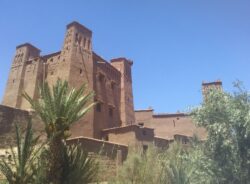
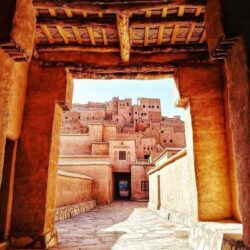
Ait Benhaddou is built on the sides of a hill, topped by a collective attic called an Agadir. Crenellated and chiseled towers give the whole ensemble a haughty look. The red “castles” seem to have been set down next to each other.
Life in the village
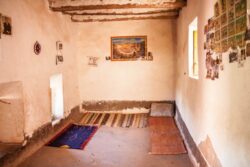
Inside, the village is a maze of alleys and covered passages. In the homes, the walls are bare, without embellishments. A small kitchen-room, a bedroom, a stable, an inner courtyard, often a first floor and a terrace possibly refreshing in the evening. The furnishings are basic. Just the essential ones.
Some simple stools, a wooden chest, mats, blankets and carpets. A bread oven, a “kanoun” brazier, a basin, a teapot, tea glasses, one or two tagines…
In the 1970s, construction began on the right bank of the Oued Ounila. Individual houses were built. The inhabitants gain modern comfort and even the magnificent view of the monumental Ksar.
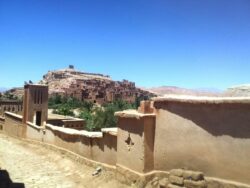
Cinema, African Hollywood
Aït Benhaddou, emptied of its human substance, becomes essentially a setting that will inspire film directors. The income generated by this film industry allows, among other things, the maintenance of this architectural jewel.
The establishment of studios, the existence of a training institute for film professions, the ISMC, near Ouarzazate, contribute greatly to activity and employment.
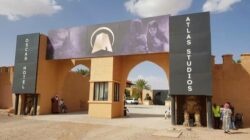
Many inhabitants work in the construction of sets, or as extras for films.
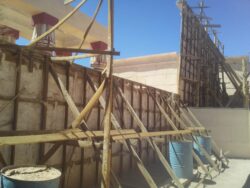
From “Alibaba and the 40 Thieves” (1954), “Lawrence of Arabia” (1962),
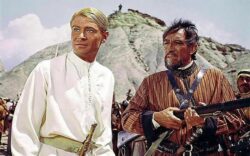
“Jesus of Nazareth” (1977) to “The Odyssey” (2026),
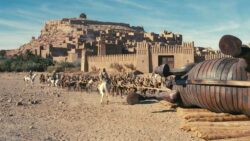
including “The game of thrones” (2011),
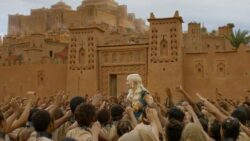
“Gladiator” (2000),
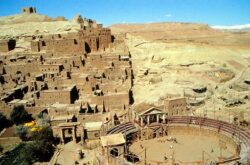
“The mummy” (1999), “Asterix mission Cleopatra” (2002)…
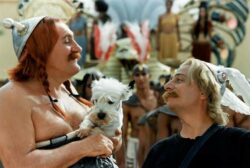
The list of famous movies shot in this region is constantly growing.
Here the directors enjoy timeless, biblical, desert landscapes but also a sometimes lush nature in neighboring oasis. Of course, it seems rather difficult to recreate a Normandy bocage, but the camera can sometimes do impossible things.
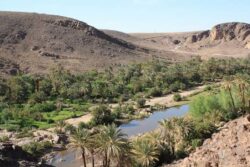
Fint Oasis
Extraordinary natural sites are not the only reason why so many filmmakers choose Morocco and this region in particular as a filming destination. The human factor is equally essential. All of them highlight the professionalism of the teams, technicians and craftsmen, extras.
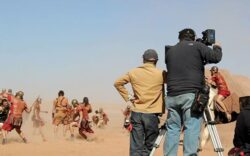
They all praise the commitment and availability of motivated and enthusiastic local employees, the elasticity of time, and the easier logistics. In addition, general costs and materials are often less expensive than elsewhere.
The fabulous destiny of Aït Benhaddou was unexpected but is so joyful in many ways.
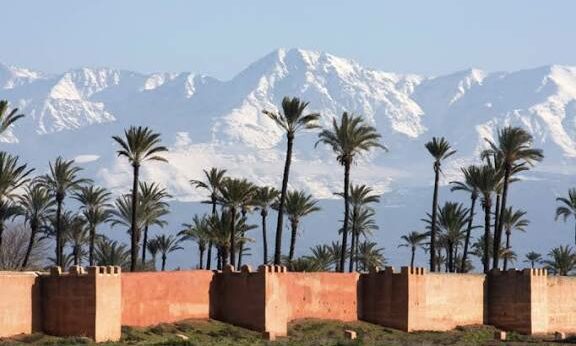
From Marrakech, a day trip is quite possible. The road, which passes through the Tichka pass (2260m) with a possible detour to Telouet, is all the way spectacular . It is a succession of landscapes of breathtaking beauty !
Do not miss this jewel during your stay !